5 Japanese Lessons in Kitchen Knife Storage to Follow
When I think of beautiful kitchen knives with a reputation that precedes them, I think of ornate santokus. A traditional Japanese knife that’s named after its three uses — slicing, dicing, and mincing — across three key food types — meat, fish, and vegetables. And while these knives are crafted to work hard, there are specific rules for maintenance that help them live up to their standing.
The way you store kitchen knives is one of these main principles. Using a traditional saya to protect the blade, avoiding leather wrapping, thoroughly drying before stowing away, and storing them in safe, accessible locations rather than haphazardly throwing them in a drawer are some Japanese lessons to take into your own kitchen.
But before you adopt them into your knife care routine, here’s how these tips will help you make the most of your cooking arsenal.
Latest Videos FromLivingetc
1. Never Store Them Loose in a Drawer

With a gorgeous knife like this Hand-Forged Kitchen Knife from MITSUMOTO SAKARI, throwing it in a drawer will ruin its quality.
(Image credit: MITSUMOTO SAKARI)
“Japanese blades are particularly fine and sharp, so allowing them to knock against other utensils can chip or dull the edge,” says Leonard Tanyag, executive head chef at Los Mochis.
“Consider using a sleek wooden knife block, a magnetic rack, or even an individual blade guard to keep them protected.” The Base by Material is a design-y example of how to store your knives in a considered way.

Kai
Stonehenge 2 Pillar Walnut Knife Block with Stainless Steel Base
As far as knife storage goes, this might be the most stylish accessory I’ve seen to date.

Executive head chef Leonard Tanyag began his culinary journey at just 16, stepping into a kitchen in Yamanashi, Japan, where the aroma of freshly steamed rice, the rhythmic sharpening of knives, and the quiet discipline instantly felt like home. Over the past 20 years, Leonard has honed his craft across the globe, working with some of the world’s most acclaimed Japanese restaurants and hospitality brands, including Sake at the Rocks, Nobu, Okku, and Zuma in Australia, Dubai, and London. Joining Thesleff Group in 2020 as co-head chef of Los Mochis Notting Hill, Leonard now serves as group executive chef, overseeing Los Mochis, Juno Omakase, Luna Omakase, and Bad Boy Burritos. He is celebrated for his precision, leadership, and deep respect for Japanese culinary philosophy, qualities that underpin his creative vision.
2. Use a Traditional Saya

This Elements Damascus Steel & Rainforest Handle Chef’s Knife from Katana Saya comes with a protective cover for storage.
(Image credit: Katana Saya)
Leonard tells me that a saya, a fitted wooden sheath, is traditionally used to protect Japanese knives. “It shields the blade without pressing against the cutting edge and is particularly useful if the knife needs to be stored in a drawer or transported.”
Although it can be quite tough to find a saya after the fact, if you’re keen to refresh your knives, buying one that comes with this wooden cover is the way to go. For example, the Flame Utility Knife from Katana Saya.

Katana Saya
Flame 15 cm Chef’s Knife
Katana Saya’s Flame Chef’s Knife comes with a storage box and a wooden saya for considered storage.
3. Avoid Leather for Long-Term Storage

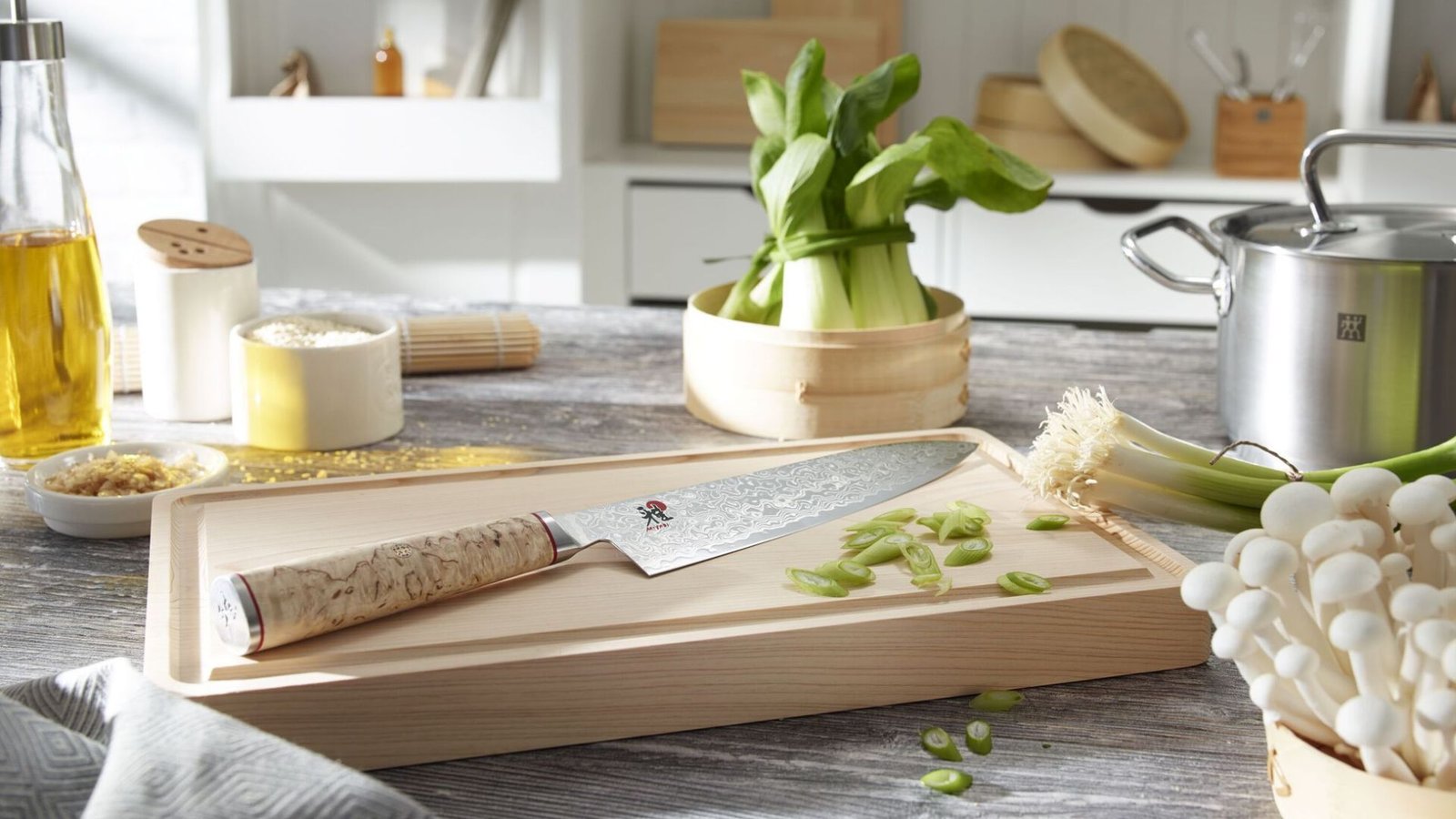
With accessories like this Damascus Steel Santoku Knife from MIYABI, leather is not a healthy choice of storage.
(Image credit: MIYABI)
Now that we’ve established the best case for knife covers, Leonard points out that, for the knives in your current collection without a saya, storing them in leather is best avoided.
“Leather can retain moisture, so it is better suited to transporting knives than storing them for extended periods,” he explains. “Hence why breathable wood is preferable for everyday storage.”
As kitchen utensils worth holding onto, making these small changes to how you store them can make all the difference in how they support your cooking and how long they last in your home.

MITSUMOTO SAKARI
Japanese Knife Rack
I love the idea of hoisting intricately designed Japanese knives on this rack from MITSUMOTO SAKARI.
4. Safe and Accessible Storage

The position in which your knives are stored can also make a difference to how it holds up in your kitchen.
(Image credit: Katto)
Another insightful Japanese lesson in kitchen knife storage is storing it in a safe and accessible space. “A knife should sit securely without pressure on its edge,” says Leonard.
And since classic knife blocks fall under decor to remove from your kitchen, switching to something like this Large Magnetic Stand from Katto is a smarter and all-around better-looking style.

IKEA
SPJUTFISK Knife Holder
IKEA’s SPJUTFISK Knife Holder is another way to show off your everyday culinary arsenal in a cool way.
5. Only Store After Thorough Drying

With these outstanding Chef’s Knives from Katto, the last thing you want to do is lose them to poor drying.
(Image credit: Katto)
Something you’ll never hear of in professional Japanese kitchens? Hastily returning a knife to its storage spot without thorough drying. “It’s important to immediately dry your knives after washing,” says Leonard.
“This is especially essential for carbon-steel knives, as any moisture left on the blade can lead to rust or discolouration.” Keeping one of these Microfibre Cloths from Amazon on stand-by will prolong your knives’ shelf life.

Amazon
Japanese Style 4-Layer Salmon Knife Holder
If you do go for something mor architectural like this, remember to store your knives slicing side up to keep the blade in good shape.
Santoku aside, there are so many clever things you’ll find in Japanese homes that make so much sense. And to know more about design and lifestyle tips from around the world, sign up for the Livingetc newsletter.