The Water Fight Over Data Centers Is a Distraction. The Grid Fight Is the Real Story. | American Enterprise Institute
Meta recently announced it would expand Project Hyperion, its data center under construction in Richland Parish, Louisiana, into a 5-gigawatt, $50 billion facility that will be one of the largest AI campuses in the world. The announcement landed amid an increasingly organized, bipartisan movement to block future data center construction. By one estimate, opponents blocked or delayed 75 projects representing $130 billion in investment in the first quarter of 2026 alone, citing water and electricity consumption among other concerns. But a closer look at these concerns shows that some of the loudest objections do not survive contact with the numbers.
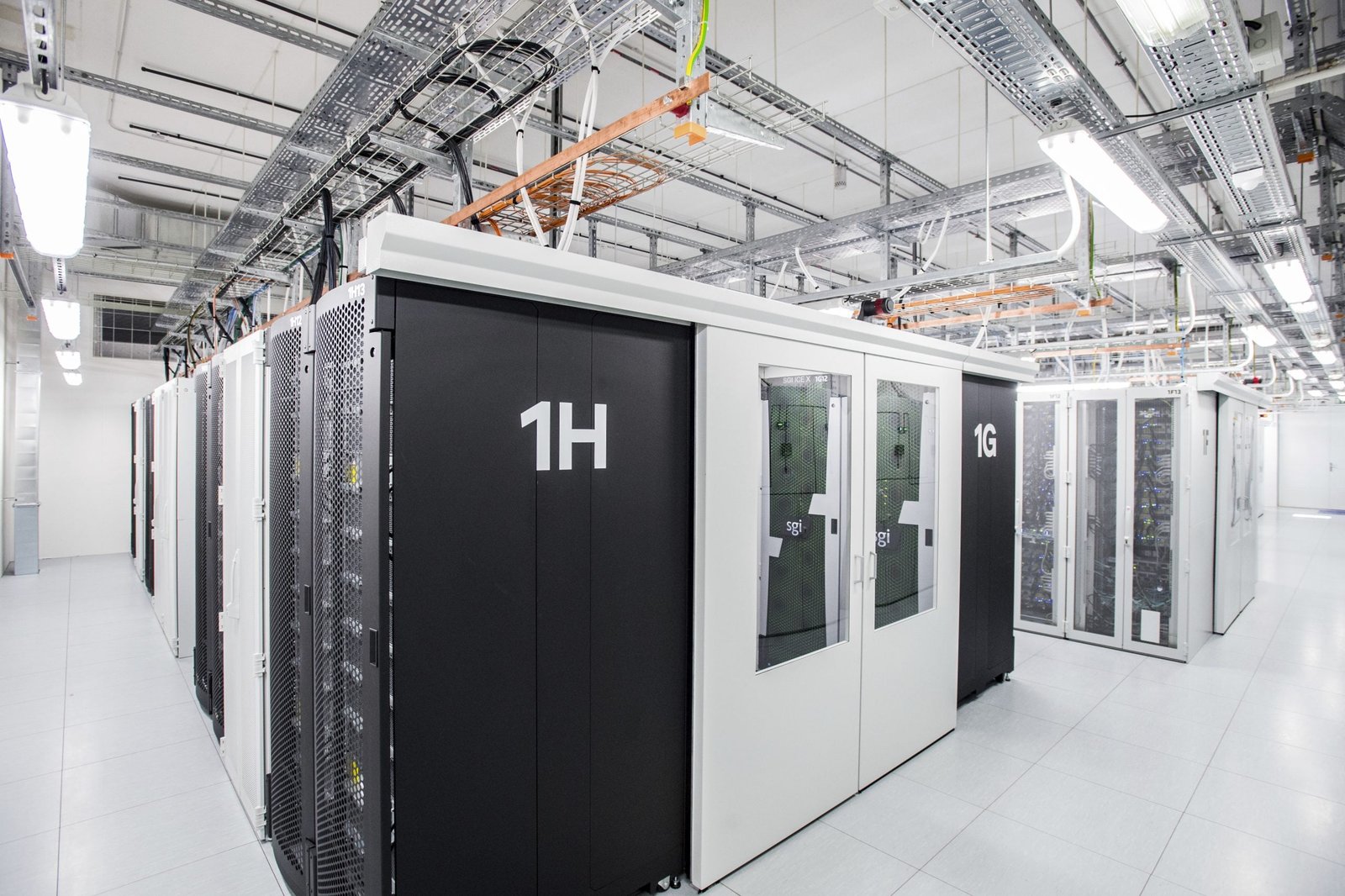
Although data centers have become memetic of the AI revolution, they are a much older component of the digital economy. At base, a data center is just a large server hall that stores and processes data. Long before generative AI, these facilities made cloud storage possible and let services like Netflix cache video content locally for faster streaming. While AI did not create the data center, it forced a step-change in their scale. Training and running frontier AI models demands vastly more computing power than earlier tasks, so the data centers built to support them are bigger, denser, and more power-hungry, which has pushed them into the spotlight.
Much of the data center pushback focuses on water consumption, but this is overblown. As my AEI colleague James Pethokoukis explains in depth, the figures most activists cite reflect mostly the indirect, upstream water consumed by the power plants supplying electricity, not by the data center itself. Focusing just on direct water use—mostly for server cooling—the industry’s water footprint shrinks dramatically. Data centers consume roughly 17.5 billion gallons of water annually, which is roughly 0.3 percent of the nation’s water supply. The California almond industry, by contrast, consumes 1.3-1.6 trillion gallons annually, or 70-90 times the water used by all U.S. data centers combined. While the number of data centers is likely to grow, companies are adopting less water-intensive designs, such as closed-loop systems that require very little water after initial construction and servers that can operate at higher temperatures before requiring cooling. Meta estimates that the Richland Parish facility will use roughly the same amount of water annually as the farmland it is replacing.
The concern over electricity use is more significant. Data centers are tremendous consumers of electricity, requiring utilities to build new generation facilities and upgrade existing infrastructure. These costs are often passed along to consumers in the form of rate increases. As Brookings notes, a recent Pew Research Center poll shows that 38 percent believe data centers’ overall impact on home energy costs is negative, while a Politico survey found half of Americans expect data center energy use to be a midterm campaign issue.
But data center growth was, until recently, associated with moderately lower electricity rates. This is because utilities have large, fixed costs that do not change with usage. Thanks to the LED revolution, deindustrialization, and other factors, American electricity demand was largely flat from 2005 through 2025 despite the shift to a digital economy. Under these conditions, data centers were a welcome addition to a local grid: a large, steady customer increases total consumption, spreading those fixed costs across a broader base and therefore reducing average costs for everyone.
Meanwhile, utilities and governments made policy choices during the flat-demand years that have hobbled the grid’s ability to add capacity now that demand growth has resumed. Over the last twenty years, permitting rules, renewable portfolio requirements, and retirement of load-bearing coal and nuclear baseload have made it harder to meet future electricity needs. While data centers are a catalyst of electricity demand growth, they merely revealed the larger structural problems in the electricity industry that have made growth difficult and raised prices for consumers.
Both the electricity and data center industries are adapting to this new environment. Most notably, many utilities are adopting large-load tariffs that charge higher rates to data centers and other significant electricity users. This shifts more fixed infrastructure costs onto the heavy users driving increased demand. Meta claims it will pay the full infrastructure cost of electrifying its Richland Parish campus. But the long-run solutions must be more innovative, including making it easier for data centers and other large electricity consumers to self-generate electricity more flexibly in response to changing market conditions.
Ultimately, data centers have become a cipher, the visible stand-in for a more diffuse set of anxieties surrounding the advent of AI, including job displacement, distrust of Big Tech, and a sense of losing control of a fast-moving technology. Perhaps some of these concerns are valid. But that’s a different debate than the one about water consumption and electricity rates, which the Richland Parish project suggests we may solve.