Skip Paint: A Surprising Trick To Switch Up The Look Of Red Oak Cabinets
We may receive a commission on purchases made from links.
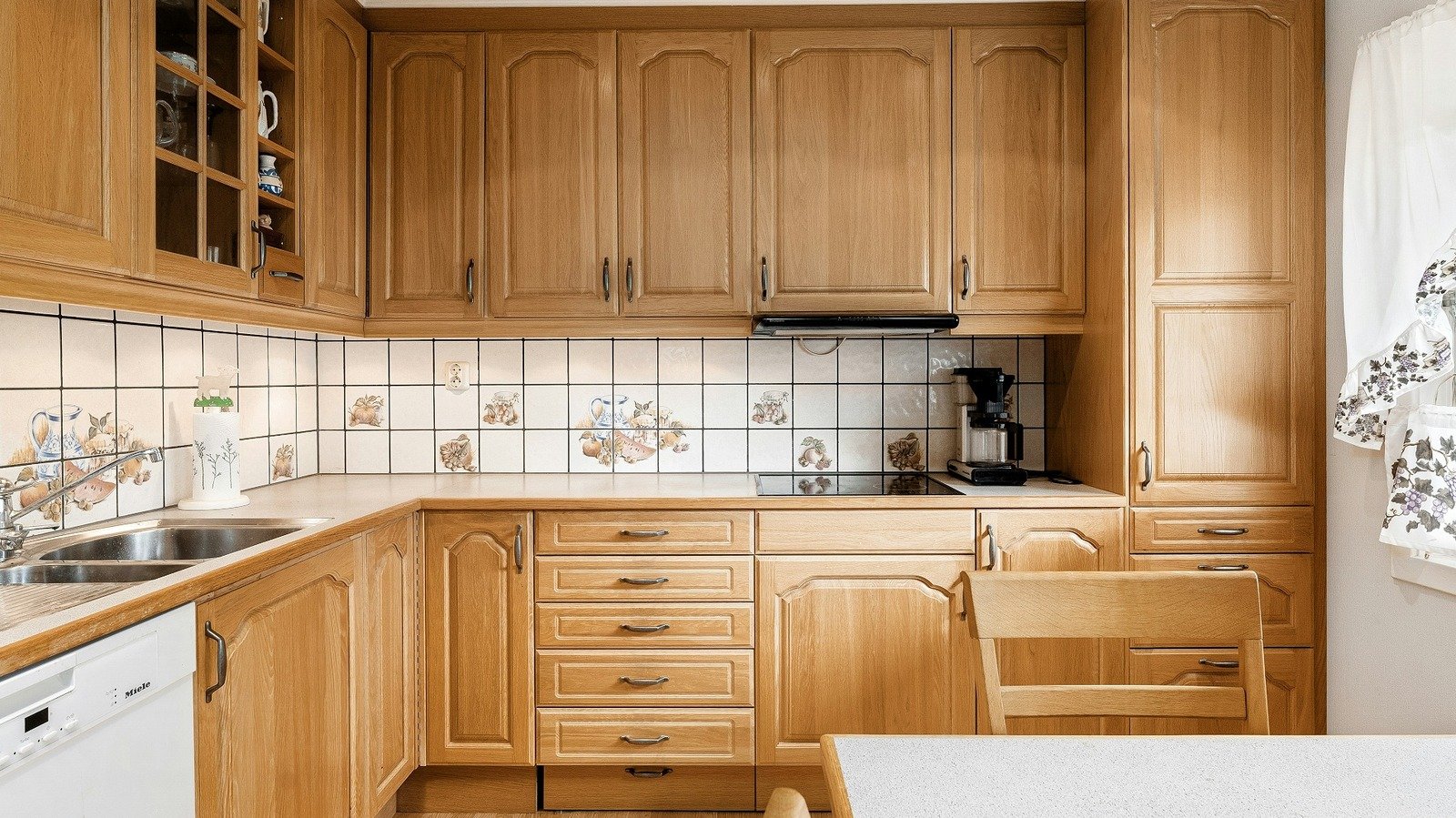
It’s hard to beat the lustrous hues of red oak, but sometimes they just don’t fit with the plan. For example, if you’re trying to brighten your cook space by painting the walls white or installing a light-colored backsplash, your old red oak cabinets could frustrate your efforts by looking drab in the revamped environment. You could paint the cabinets, but then you lose the look of natural wood. There’s another solution that’s worth the considerable extra effort, and that’s to use wood bleach to lighten the oak.
The type of bleach you need is a two-component one that combines sodium hydroxide with hydrogen peroxide. This is available for purchase under several brand names, including Circa 1850 Wood Bleach and the Zinsser Wood Bleach Kit, or you can make your own using 100% Sodium Hydroxide and 27% to 30% Hydrogen Peroxide. Avoid other types of bleach, including chlorine and oxalic acid. They remove stains from wood, but they won’t lighten the wood itself. Only a two-component bleach will do that.
Bleaching red oak lightens the color, but it doesn’t magically turn red oak into white oak. The wood still has the reddish hues characteristic of that species, but they are far more subtle and easy to mask with a whitewash stain or one that contains mostly brown and yellow pigments, such as English Oak from Minwax. You can also just leave the wood unstained and coat it with a clear finish, and it will look lighter than it did before.
How to lighten wood with two-part bleach
Bleaching wood involves more effort than painting because, instead of simply applying a new coating, you have to strip the finish to get down to the bare wood. Once you’ve completed that major task, you can apply the bleach, and for that, check the instructions on the container. Some may say to combine the two parts (usually designated part A and part B) in a container, while others may tell you to apply the parts separately, usually starting with part A, which is the sodium hydroxide solution. Some may specify that either method is okay.
You can apply the bleach by brushing or spraying. If you brush, use a foam brush or a synthetic bristle brush; a natural-bristle brush gets too floppy when you use it with a thin, watery material like bleach. Spread the bleach evenly, being careful not to let it puddle, and let the wood dry overnight. Remember that two-part wood bleach is caustic, so you need to wear gloves and eye protection when using it.
If a single treatment with bleach doesn’t lighten the wood enough, you can repeat it as many times as you want until you’re satisfied. After the last treatment, you need to neutralize the caustic bleach by brushing or spraying on a solution of two parts distilled water and one part household vinegar (an acid). All these liquids will raise the wood grain, so after the vinegar solution dries, sand lightly before applying a stain or finish.